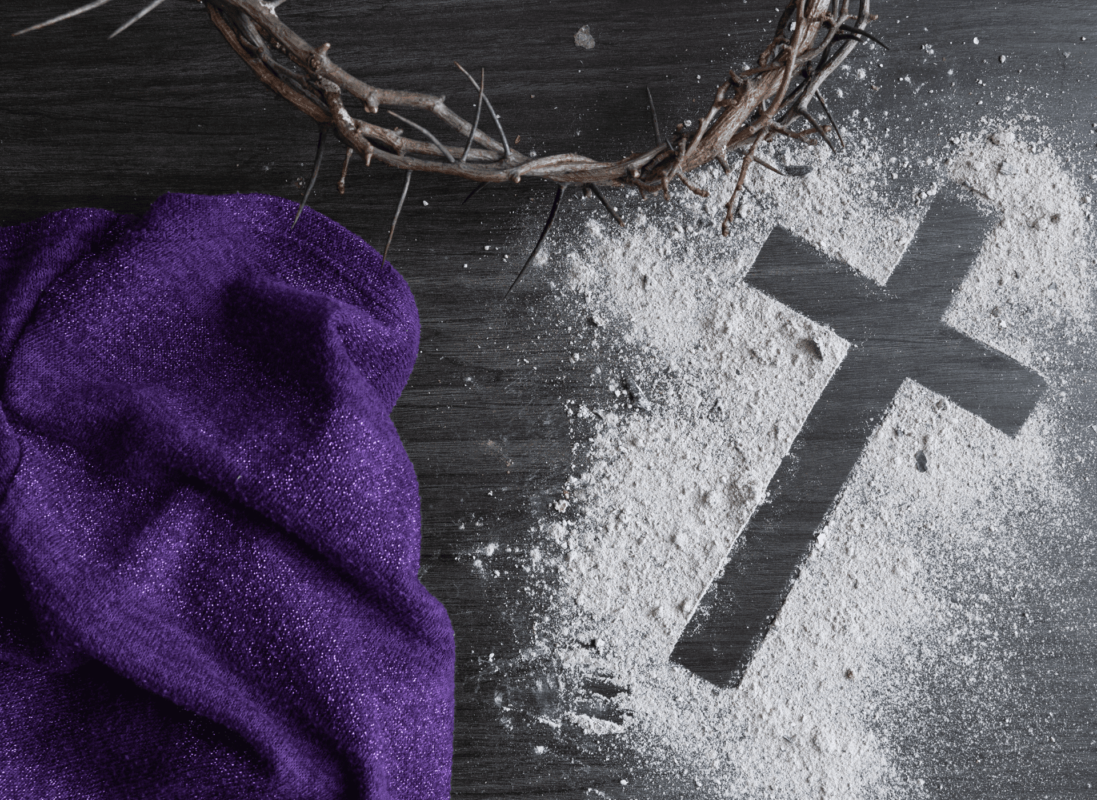
Ash Wednesday is the first day of the holy season of Lent – the Forty Days of Preparation for Easter. It will be noted that during Holy Masses, the priest places Ash on the forehead or on the head of the churchgoers, while reciting the words "Repent and be faithful to the Good News." or, "Remember, man, that you are dust and to dust you shall return." The ash placed on the head comes from the burnt palm leaves used in the previous year.
𝐀𝐘𝐔𝐍𝐎 𝐀𝐓 𝐀𝐁𝐒𝐓𝐈𝐍𝐄𝐍𝐒𝐘𝐀 Ash Wednesday is also a day of fasting and abstinence. Fasting is the reduction of food intake throughout the day. It is the eating of only one full meal and two small meals without meat.
Fasting focuses on two aspects – the physical and the spiritual. The physical, which trains the self to discipline itself to be self-controlled and the spiritual aspect to train it against sins or temptations and one’s own desires. Abstinence is the voluntary self-restraint from eating meat on the days set by the Church. These are the days of Ash Wednesday, Good Friday and are also encouraged on all Fridays during Lent. This includes self-restraint in activities related to passion and overindulgence in things that bring pleasure or comfort. This includes avoiding excess food, drinks such as alcohol, vices such as smoking and sexual activities.
Ash Wednesday and Good Friday are days of fasting for Catholic believers aged 18 to 59. Meanwhile, Catholic believers aged 14 and above must practice abstinence unless there is a serious health-related reason.
ASHES ON THE FOREHEAD: SACRAMENTAL AND SACRAMENT The act of putting ashes on the forehead or head can be considered sacramental, because it is a symbol of our readiness to receive something more important — and this is the Sacrament of Repentance or Confession.
We can see in the Old Testament, when the Prophet Jonah announced to the people of Nineveh that He would destroy this city after forty days, all the people of Nineveh, including their king, wore sackcloth, sat in ashes and fasted, as a sign of their repentance for their sins. Because of the repentance and conversion of the people of Nineveh, God did not proceed with His plan to destroy this city.
Ashes on the Forehead are a sign of Repentance and Conversion to God, but conversion should not remain just a sign or symbol. By virtue of the Sacrament of Confession, our Church invites us to truly repent and convert to the Lord, so that we may truly unite ourselves with his sufferings and patience, as well as so that the blessings of his Resurrection may flow fully to us, leading to eternal life.
REFERENCES: Fast & abstinence. (n.d.). USCCB. https://www.usccb.org/.../catholic-information-on-lenten... Riesen, L. (2025, February 26). Seven questions and answers about Ash Wednesday. Teaching Catholics. https://www.teachingcatholickids.com/7-questions-and.../
Written by: Gabriel Bantug, The Sandigan Media
#AngSandiganMalolos
malolosdiocese
The Sandigan - Diocese of Malolos is the official platform of the Roman Catholic Diocese of Malolos under the Malolos Diocesan Commission on Social Communications launched as a website on February 23, 2019.