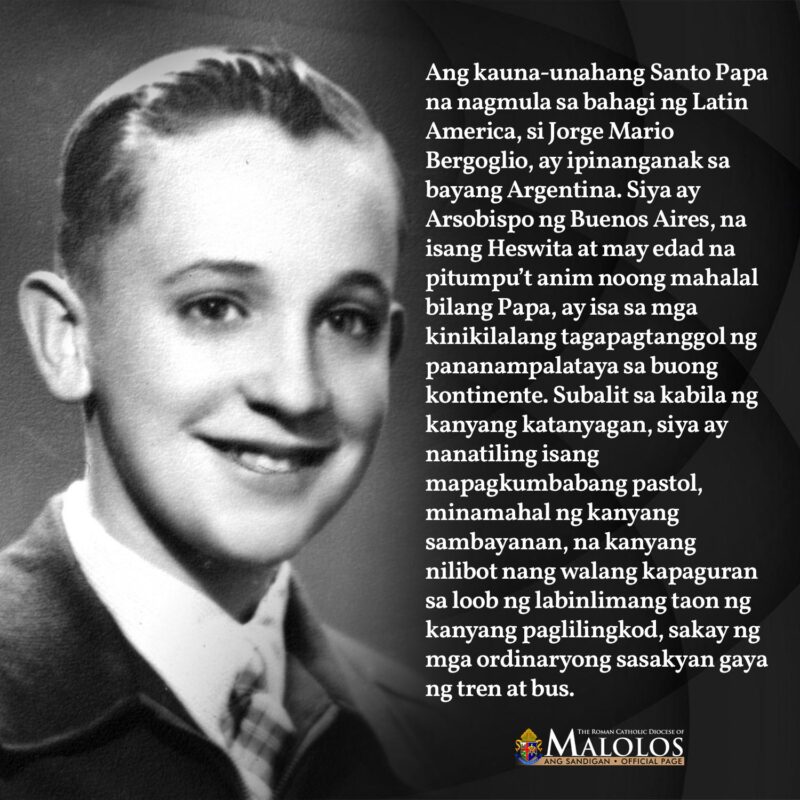
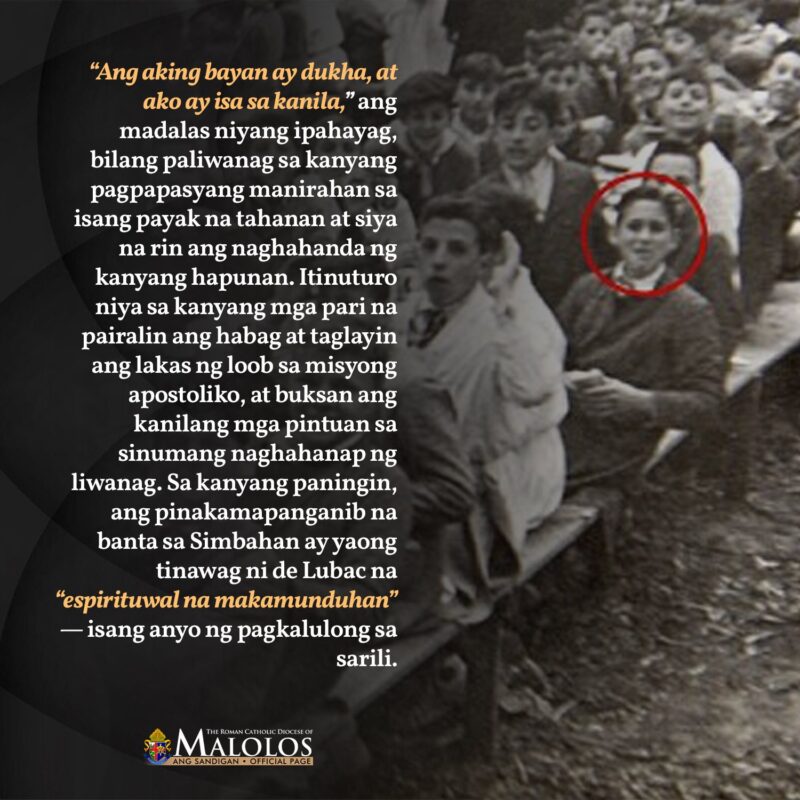
The first Latin American Pope, Jorge Mario Bergoglio, was born in Argentina. He was the Archbishop of Buenos Aires, a Jesuit and seventy-six years old when he was elected Pope, and was one of the most respected defenders of the faith on the continent. But despite his fame, he remained a humble shepherd, beloved by his people, whom he traveled tirelessly during his fifteen years of ministry, traveling by ordinary means of transport such as trains and buses. “My people are poor, and I am one of them,” he often declared, explaining his decision to live in a simple home and prepare his own dinner. He taught his priests to practice compassion and courage in the apostolic mission, and to open their doors to anyone who seeks the light. In his view, the most dangerous threat to the Church was what de Lubac called “spiritual worldliness” — a form of self-indulgence.

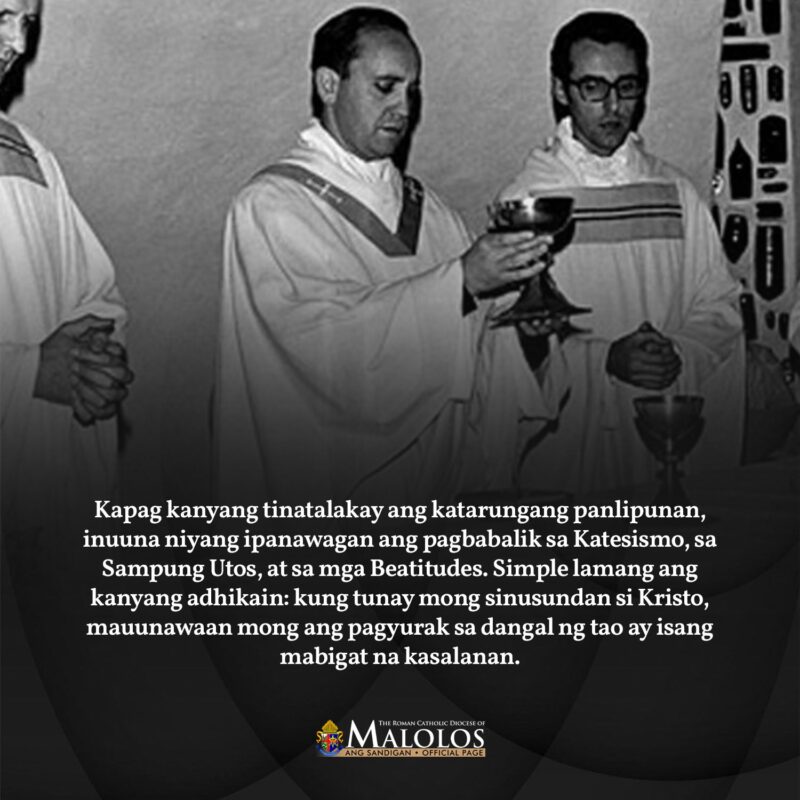
When he discusses social justice, he first calls for a return to the Catechism, the Ten Commandments, and the Beatitudes. His goal is simple: if you truly follow Christ, you will understand that trampling on human dignity is a grave sin.

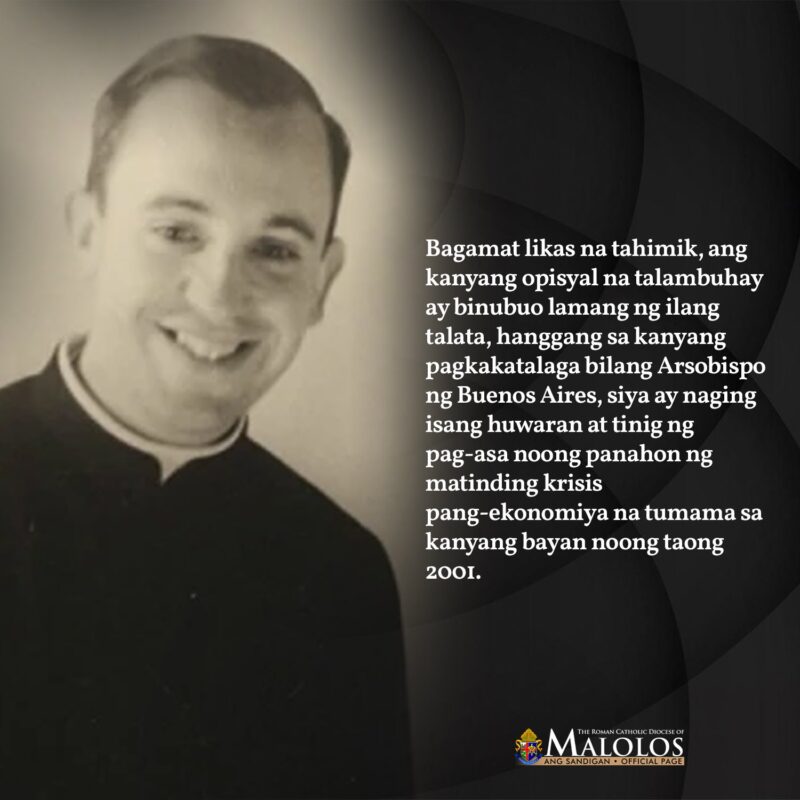
Although naturally quiet, his official biography consists of only a few paragraphs, until his appointment as Archbishop of Buenos Aires, he became a role model and voice of hope during the severe economic crisis that hit his city in 2001.

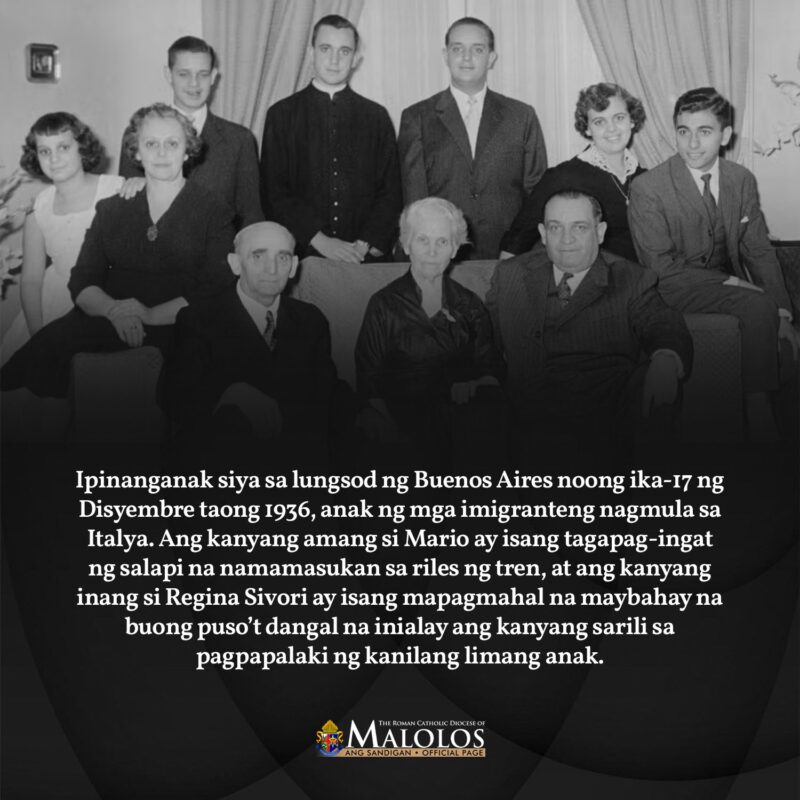
He was born in the city of Buenos Aires on December 17, 1936, the son of immigrants from Italy. His father, Mario, was a cashier who worked for the railroad, and his mother, Regina Sivori, was a loving housewife who devoted herself wholeheartedly and honorably to raising their five children.

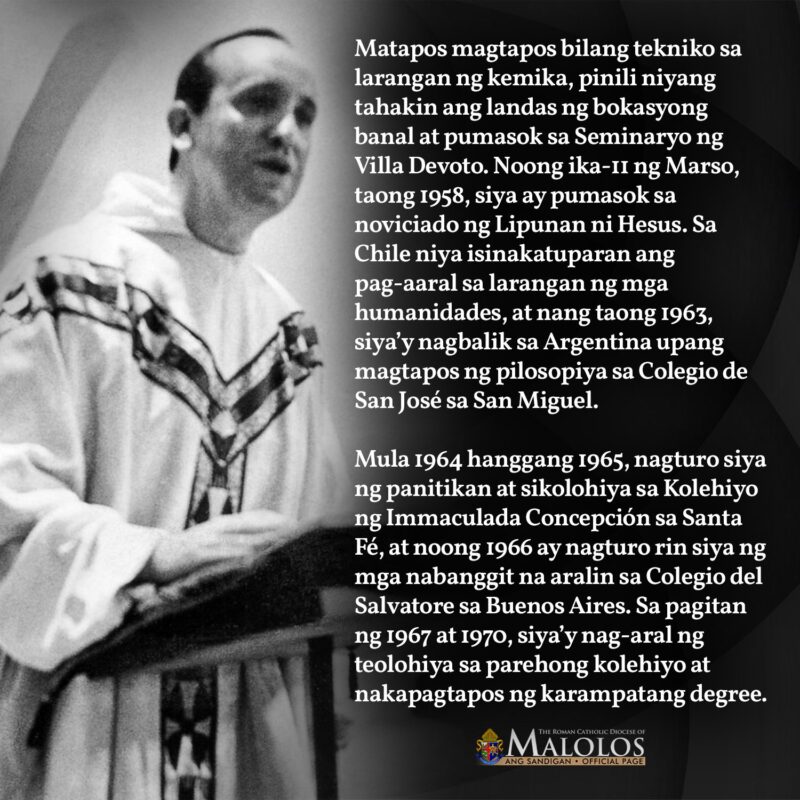
After graduating as a technician in the field of chemistry, he chose to follow the path of a sacred vocation and entered the Seminary of Villa Devoto. On March 11, 1958, he entered the novitiate of the Society of Jesus. In Chile, he completed his studies in the field of humanities, and in 1963, he returned to Argentina to graduate in philosophy at the Colegio de San José in San Miguel.

From 1964 to 1965, he taught literature and psychology at the Colegio de Immaculada Concepción in Santa Fé, and in 1966 he also taught the aforementioned subjects at the Colegio del Salvatore in Buenos Aires. Between 1967 and 1970, he studied theology at the same college and graduated with the corresponding degree.

On December 13, 1969, he was ordained a priest by Archbishop Ramón José Castellano. He continued his spiritual formation from 1970 to 1971 at the University of Alcalá de Henares in Spain, and on April 22, 1973, he took final vows as a full member of the Jesuits.

Upon his return to the country, he was appointed as a novice trainer at Villa Barilari, San Miguel; became a professor of Theological Teaching in the same place; advisor to the Province of the Society of Jesus; and Rector of the Colegio Máximo of Philosophy and Theology.

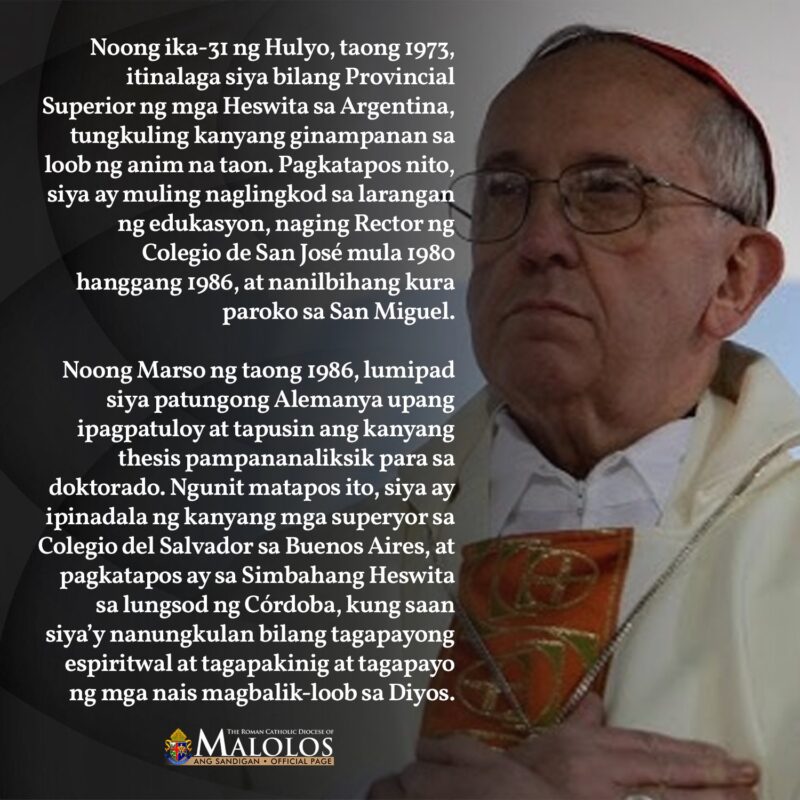
On July 31, 1973, he was appointed Provincial Superior of the Jesuits in Argentina, a position he held for six years. After this, he again served in the field of education, becoming Rector of the Colegio de San José from 1980 to 1986, and serving as parish priest in San Miguel.

In March 1986, he flew to Germany to continue and complete his doctoral thesis. But after this, his superiors sent him to the Colegio del Salvador in Buenos Aires, and then to the Jesuit Church in the city of Córdoba, where he served as spiritual advisor and listener and counselor to those who wanted to convert to God.

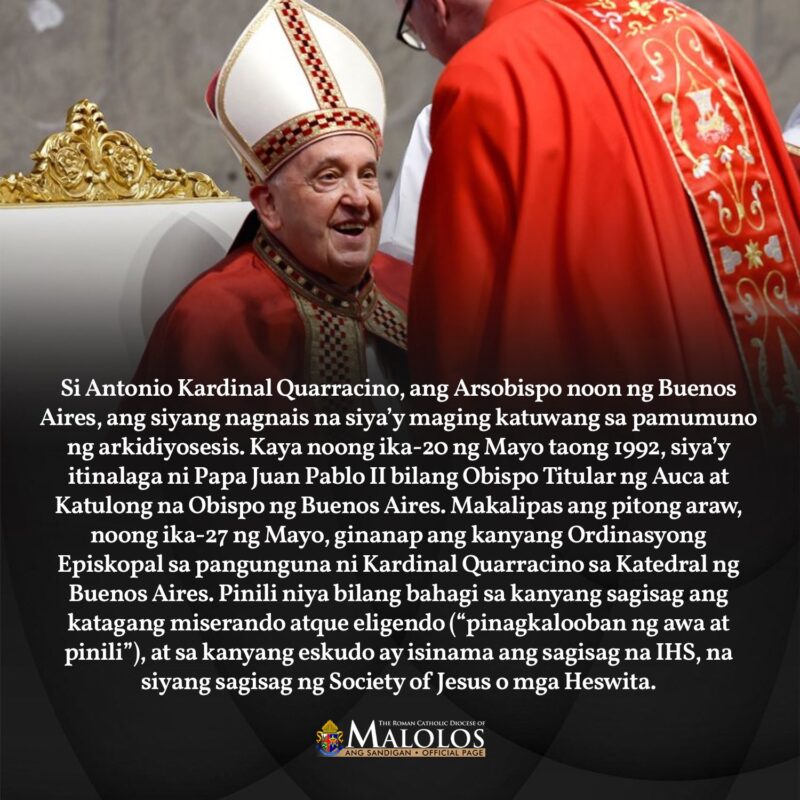
Antonio Cardinal Quarracino, then Archbishop of Buenos Aires, wanted him to be his assistant in the administration of the archdiocese. So on May 20, 1992, Pope John Paul II appointed him Titular Bishop of Auca and Auxiliary Bishop of Buenos Aires. Seven days later, on May 27, his Episcopal Ordination took place under the presiding authority of Cardinal Quarracino in the Cathedral of Buenos Aires. He chose as part of his symbol the phrase miserando atque eligendo (“granted mercy and chosen”), and his coat of arms included the symbol IHS, which is the symbol of the Society of Jesus or the Jesuits.

His first interview as bishop was published in a simple parish newspaper, Estrellita de Belém. He was immediately appointed Vicar Episcopal of the district of Flores, and on December 21, 1993, he was also appointed Vicar General of the Archdiocese. On June 3, 1997, he was elevated to the dignity of Coadjutor Archbishop of Buenos Aires. Nine months later, after the death of Cardinal Quarracino, he succeeded as Archbishop on February 28, 1998, and also as Primate of Argentina and Ruler of the faithful of the "Eastern-rite" who do not have their own bishop in the country.

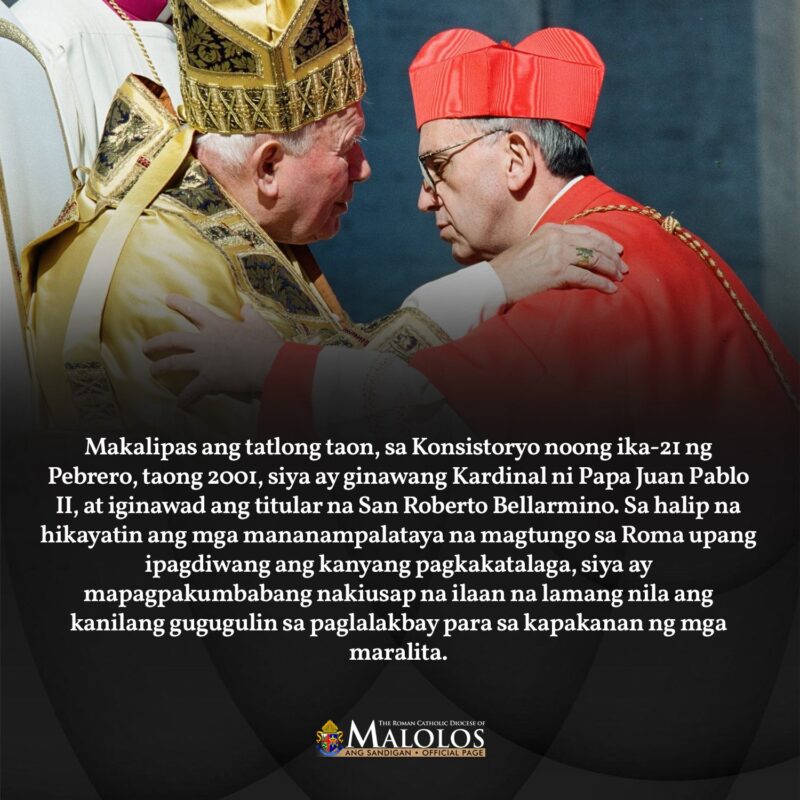
Three years later, in the Consistory of February 21, 2001, he was created Cardinal by Pope John Paul II, and given the titular Saint Robert Bellarmine. Instead of encouraging the faithful to travel to Rome to celebrate his ordination, he humbly asked that they dedicate their travel expenses to the welfare of the poor.

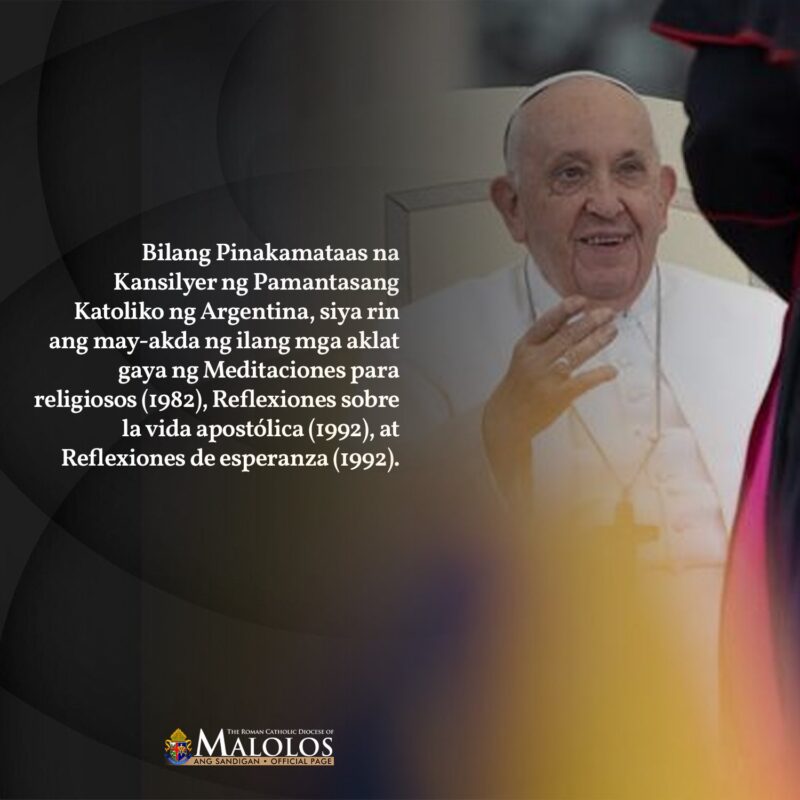
As Supreme Chancellor of the Catholic University of Argentina, he is also the author of several books such as Meditaciones para religiosos (1982), Reflexiones sobre la vida apostólica (1992), and Reflexiones de esperanza (1992).

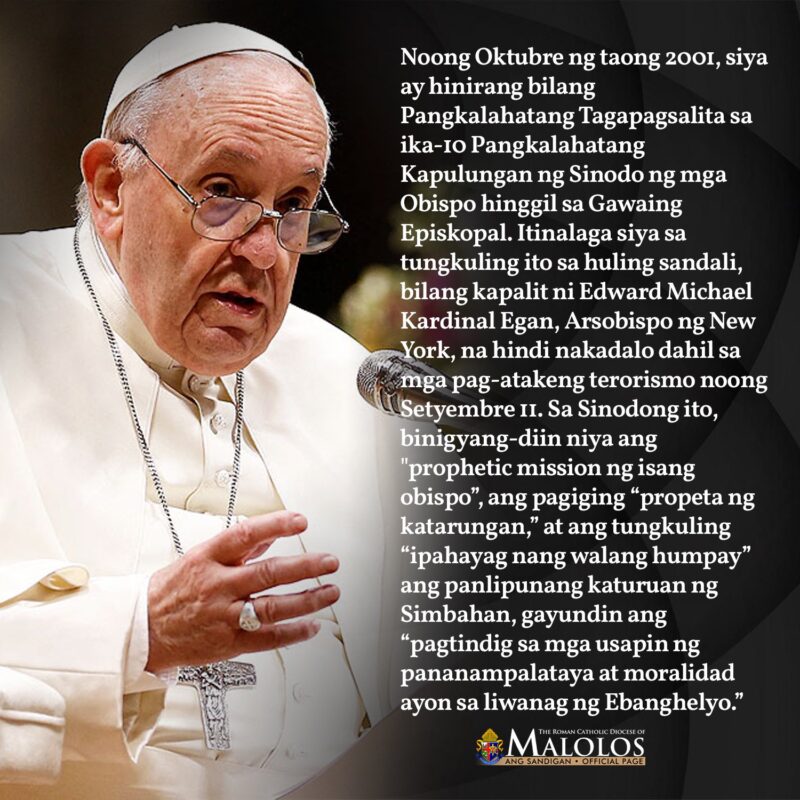
In October 2001, he was appointed General Spokesperson for the 10th General Assembly of the Synod of Bishops on Episcopal Work. He was appointed to this role at the last minute, replacing Edward Michael Cardinal Egan, Archbishop of New York, who was unable to attend due to the September 11 terrorist attacks. At this Synod, he emphasized the "prophetic mission of a bishop", being a "prophet of justice", and the duty to "proclaim without ceasing" the social teaching of the Church, as well as "raising questions of faith and morals in the light of the Gospel."

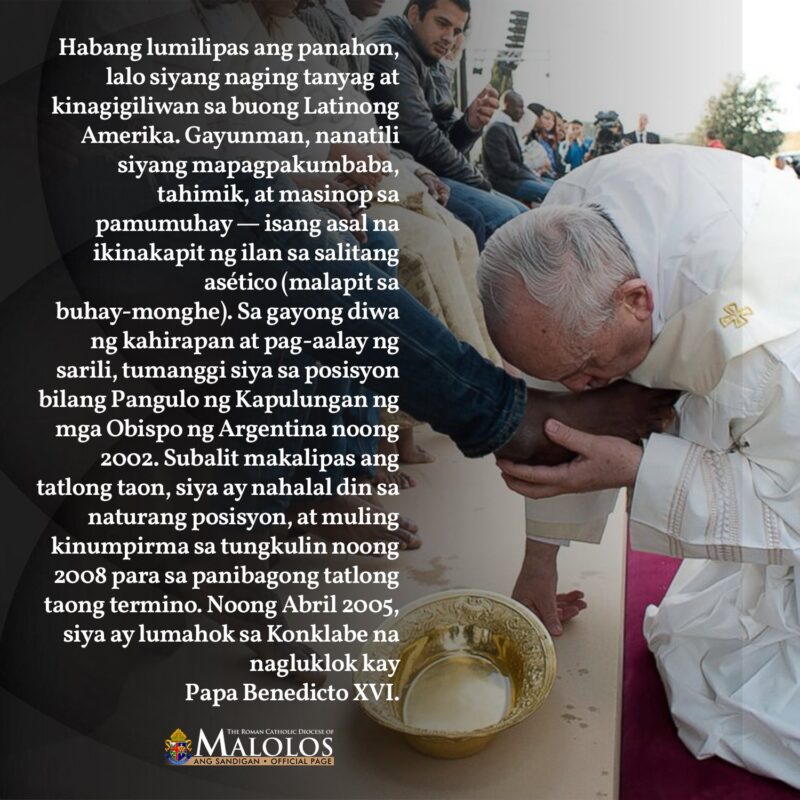
As time went by, he became more and more famous and beloved throughout Latin America. However, he remained humble, quiet, and austere in his way of life — a quality that some have applied to the word asético (close to monastic life). In that spirit of poverty and self-sacrifice, he declined the position of President of the Argentine Bishops’ Conference in 2002. However, three years later, he was elected to that position, and was reconfirmed in office in 2008 for another three-year term. In April 2005, he participated in the Conclave that installed Pope Benedict XVI.

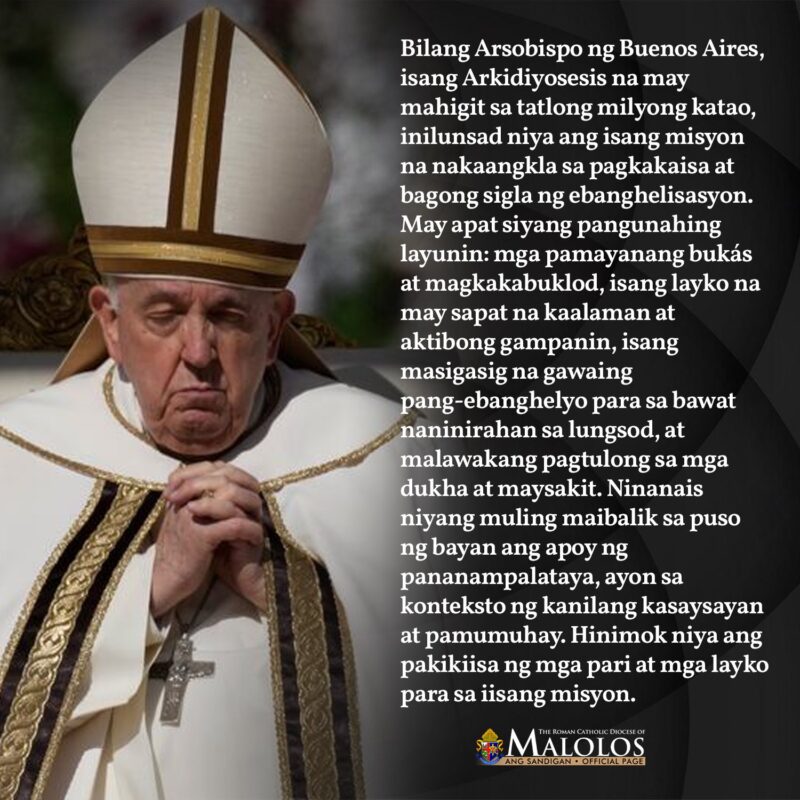
As Archbishop of Buenos Aires, an Archdiocese of more than three million people, he launched a mission anchored in unity and a renewed vigor of evangelization. He had four main goals: open and united communities, a lay faithful who were sufficiently informed and actively engaged, a zealous evangelization of every inhabitant of the city, and widespread assistance to the poor and sick. He wanted to rekindle the fire of faith in the hearts of the people, in the context of their history and life. He encouraged the unity of priests and lay people for a common mission.

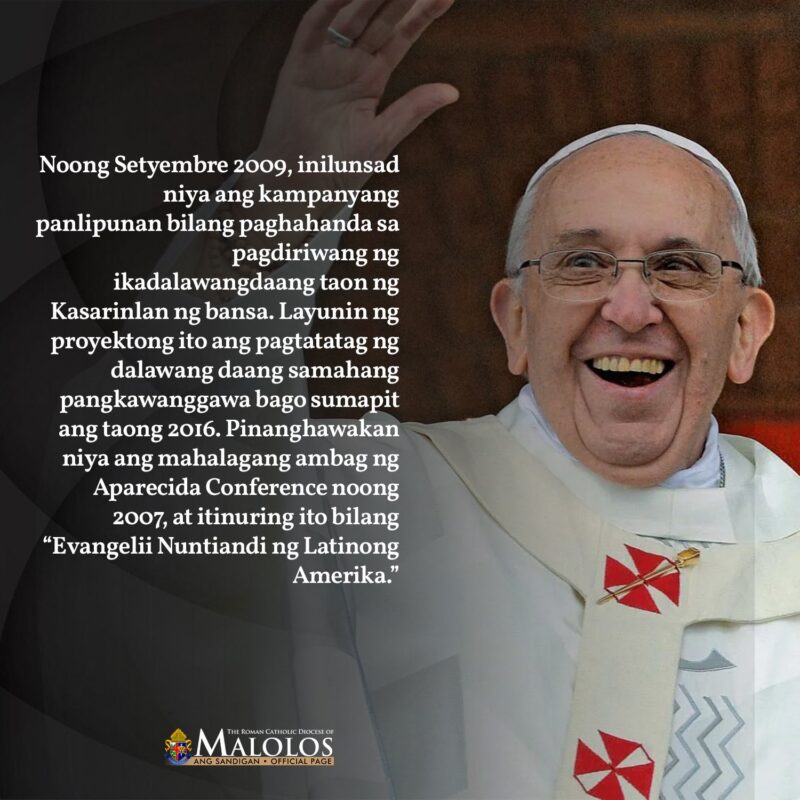
In September 2009, he launched a social campaign in preparation for the celebration of the bicentennial of the country's Independence. The goal of this project is to establish two hundred charitable organizations before the year 2016. He held the important contribution of the Aparecida Conference in 2007, and considered it the "Evangelii Nuntiandi of Latin America."

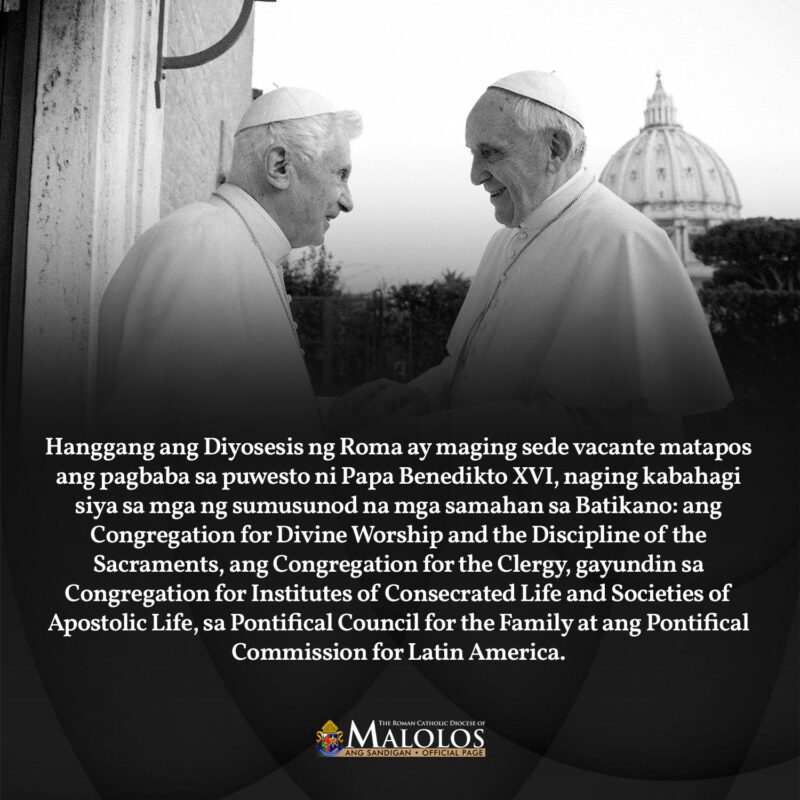
Until the Diocese of Rome became sede vacante after the resignation of Pope Benedict XVI, he was involved in the following Vatican organizations: the Congregation for Divine Worship and the Discipline of the Sacraments, the Congregation for the Clergy, as well as the Congregation for Institutes of Consecrated Life and Societies of Apostolic Life, the Pontifical Council for the Family and the Pontifical Commission for Latin America.

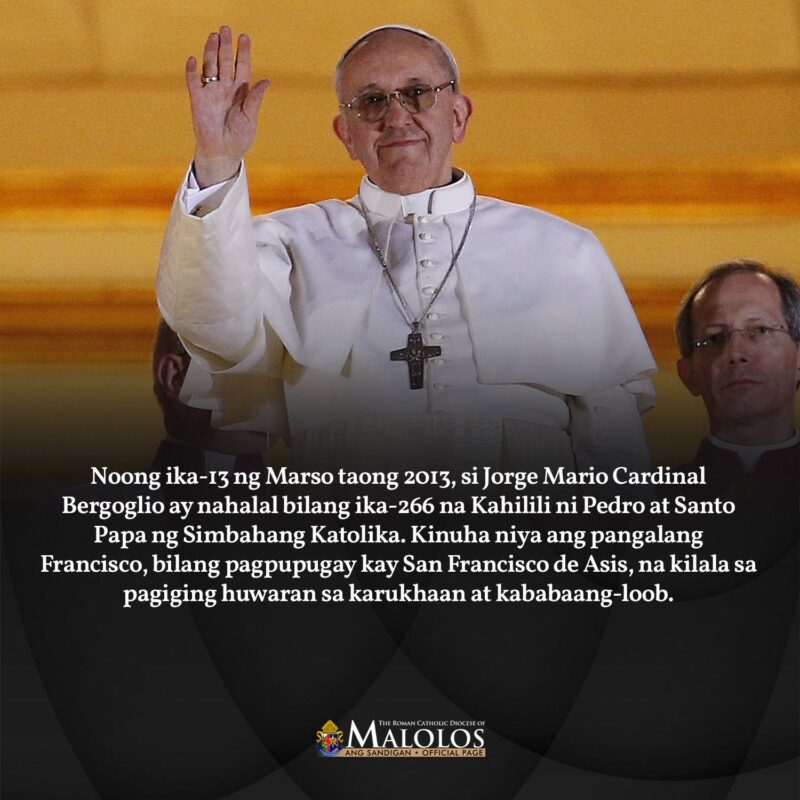
On March 13, 2013, Jorge Mario Cardinal Bergoglio was elected as the 266th Successor of Peter and Pope of the Catholic Church. He took the name Francisco, in homage to Saint Francis of Assisi, known for being a model of poverty and humility.

Reference: Biography of Pope Francis, Vatican Website
Translation in Tagalog by: Gabriel Bantug, Ang Sandigan Media
#AngSandiganMalolos
malolosdiocese
The Sandigan - Diocese of Malolos is the official platform of the Roman Catholic Diocese of Malolos under the Malolos Diocesan Commission on Social Communications launched as a website on February 23, 2019.